
Last updated November 25, 2026
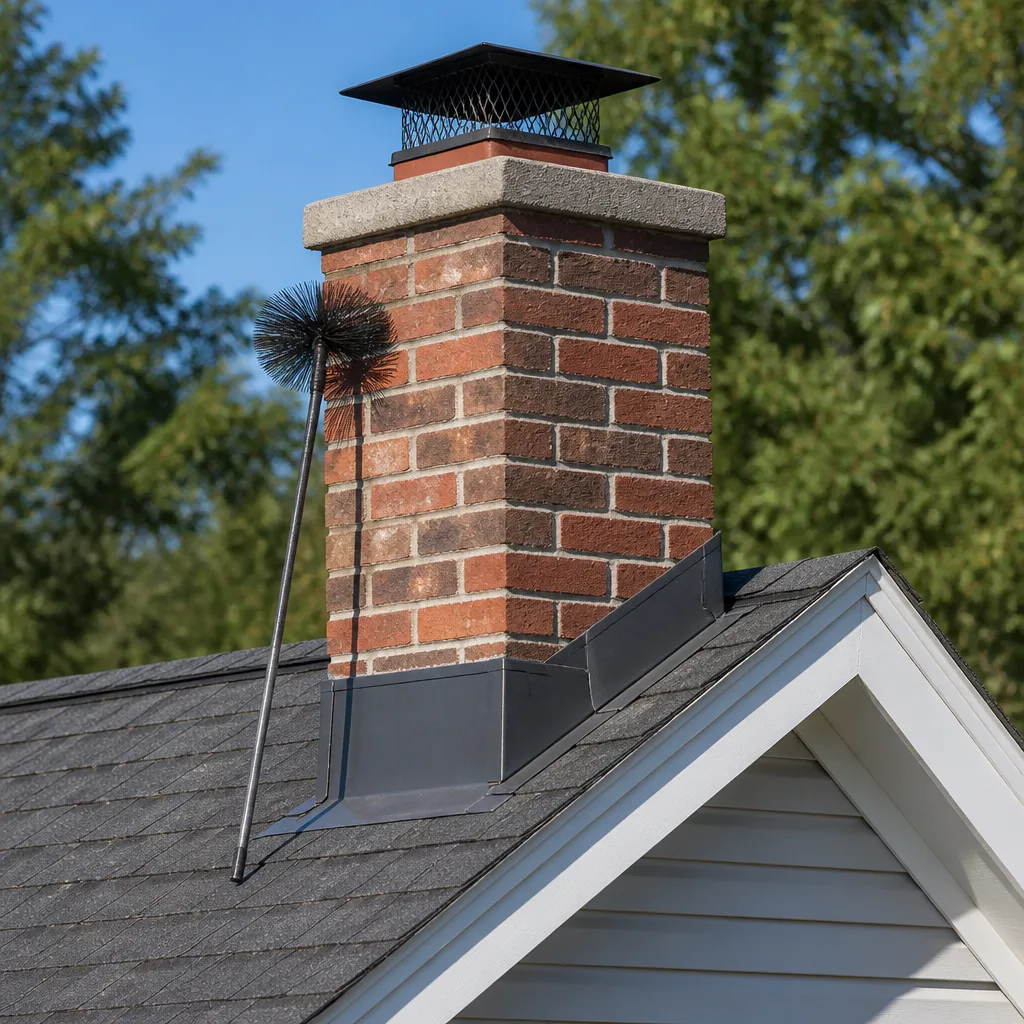 Sweep & inspection
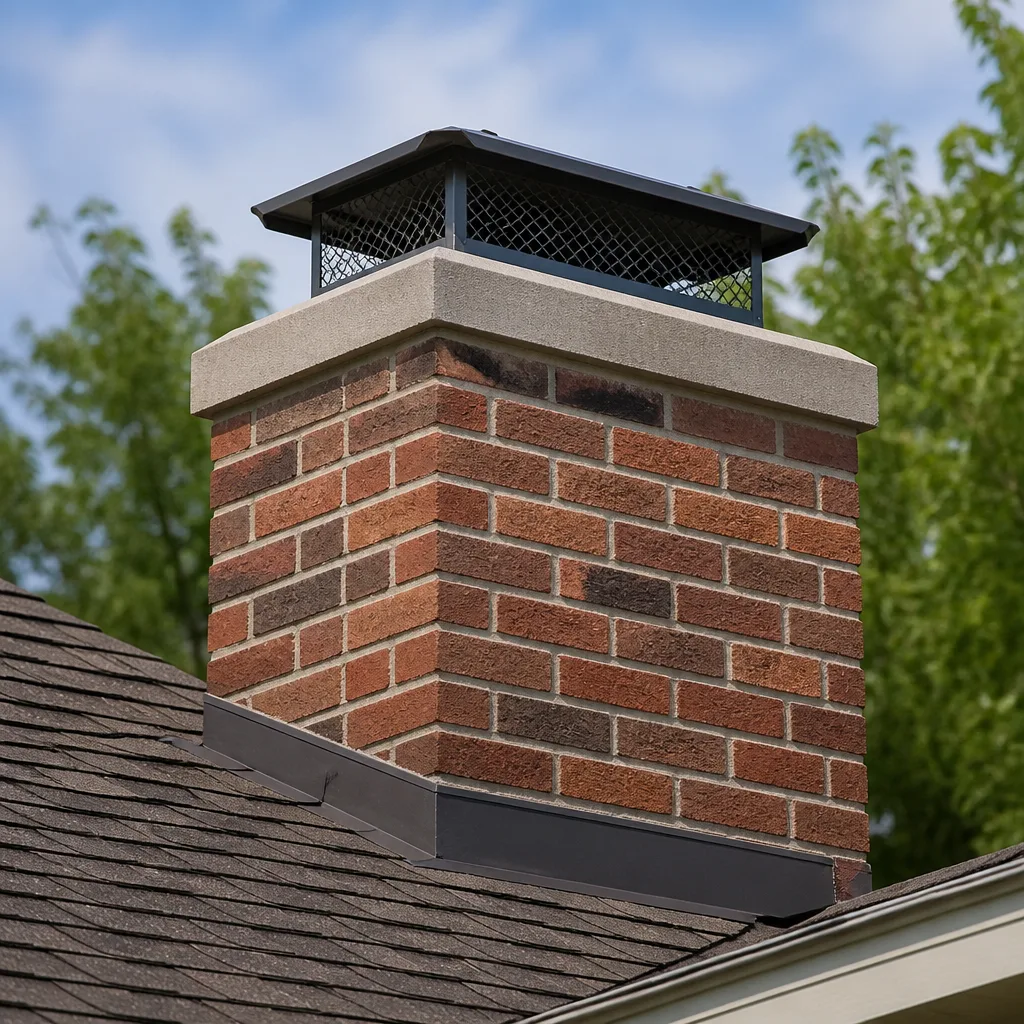 Caps & crowns
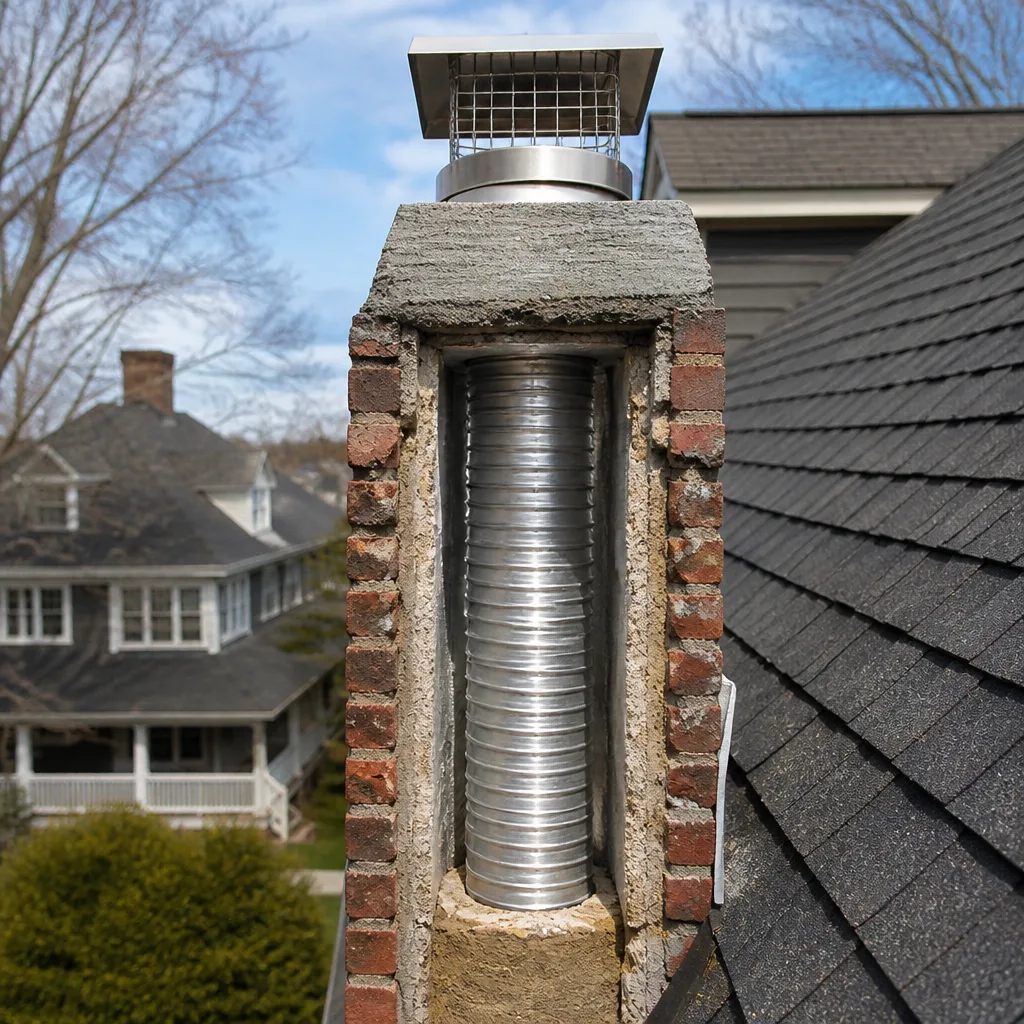 Flue relining
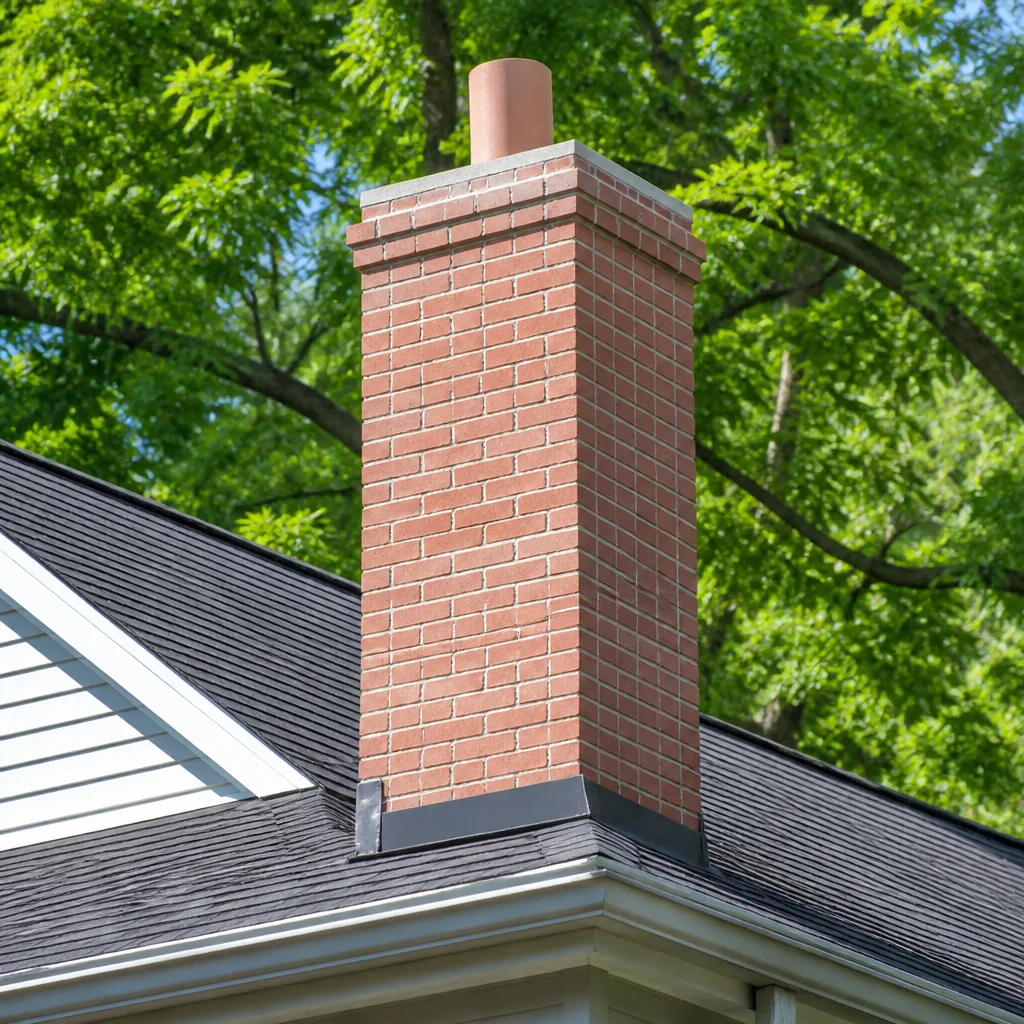 Masonry repair
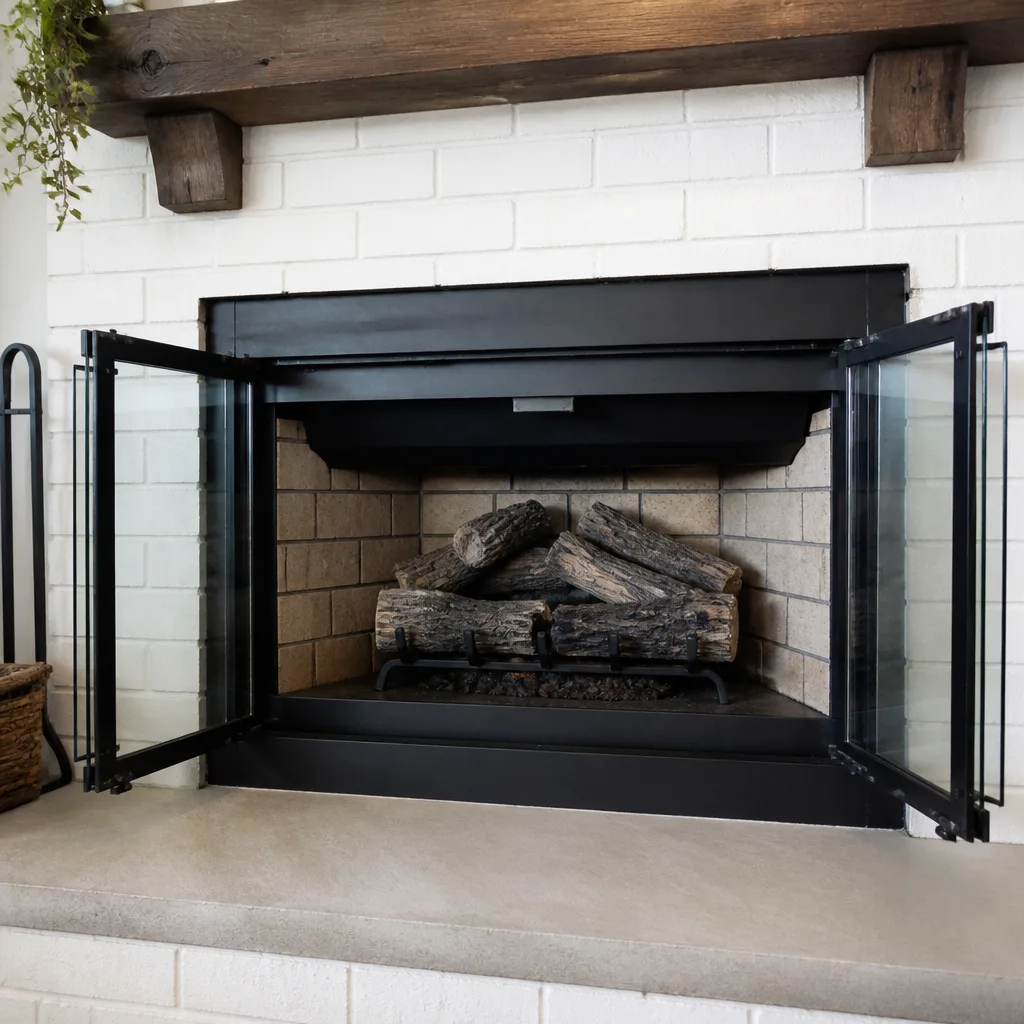 Gas fireplace service
Level 1 sweep and inspection to the NFPA 211 annual standard - flue, crown, cap, and flashing checked and photographed
Chimney sweep logs do not sweep chimneys. They loosen some creosote - which then falls where a brush and vacuum still have to collect it.
Chimney Sweep Troubleshooting in West Valley City: Common Problems and How to Fix Them
If smoke is backing up into your living room after a recent cleaning, your flue is already clean. The problem is somewhere else entirely, and this is the most common misdiagnosis we see in West Valley City homes. Homeowners assume every chimney issue is a sweeping issue, book a brush, and end up right back where they started: smoky fire, weak draft, water in the firebox. Cleaning removes creosote. It doesn’t fix a damaged liner, a failed crown, or negative pressure caused by the house itself. This guide maps the symptoms you’re seeing to the root cause a trained technician looks for first, so you walk into the call knowing what you’re dealing with.
Quick Answer
Most chimney problems in West Valley City fall into one of four categories: creosote blockage (needs a sweep), draft failure from negative pressure or elevation-related airflow issues (rarely fixed by cleaning), a damaged flue liner (needs camera inspection and often resurfacing or relining), or water intrusion from a failed cap or crown (looks like a drafting problem but isn’t). Smoke behavior and smell tell you which category you’re in before anyone arrives.
Table of Contents
- Symptom-to-Cause Matrix: Reading Smoke, Odor, and Water From Inside the House
- Why West Valley City Homes Get Backdraft and Negative Pressure Problems
- Identifying Stage 1 vs. Stage 2 Creosote Before a Technician Arrives
- Damaged Liner vs. Blockage: How the Symptoms Differ
- Flashing Leak vs. Cracked Crown: Two Identical Symptoms, Two Different Fixes
- What You Can Safely Check Yourself vs. What Needs a Camera and a Pro
- Repair Options: When HeatShield Restoration Works and When It Doesn’t
- Common Mistakes to Avoid
- When to Call a Professional
- Frequently Asked Questions
Symptom-to-Cause Matrix: Reading Smoke, Odor, and Water From Inside the House
The single most useful diagnostic tool you have as a homeowner is your own observations during and after a fire. Where smoke goes, when it backs up, and what you smell all point to different components of the chimney system. Before you call anyone for a chimney sweep, watch your fire for one evening and note what happens.
Here’s how the four most common problems trace back to their actual source:
- Smoke rolls back into the room only at fire startup or at the end of the burn. This is classic cold-flue backdraft. The flue is cold and dense, air is falling down the chimney, and the fire has to overcome it. Usually a draft issue, not a blockage.
- Smoke backs up continuously, every fire, gets worse over months. That points to a partial creosote blockage or a broken flue tile choking the path. Needs a camera inspection.
- Strong smoky odor when the fireplace is idle, especially on warm days. Smoking smell when there’s no fire is almost always creosote in the flue reacting to pressure changes and humidity, or a downdraft pushing old buildup into the room.
- Water in the firebox, rusted damper, musty smell after rain. Cap, crown, or flashing failure. Not a sweep issue at all, and no amount of cleaning will stop it.
West Valley City sits in the Salt Lake Valley, and the specific combination of elevation and valley geography changes how homes draft compared to sea-level. A chimney that worked fine in a previous house or a previous neighborhood may not draft the same way here. That distinction is why troubleshooting by symptom, not by habit, matters. Smoke behavior on a wind-whipped evening in West Valley City tells you more about your system than any single visit.
Why West Valley City Homes Get Backdraft and Negative Pressure Problems
Backdraft is when air flows down your chimney instead of up. It’s not a cleaning problem, and a brush won’t fix it. It happens when the air pressure inside your house is lower than the pressure at the top of the chimney, so the chimney draws the wrong way. In our experience across West Valley City, this is the second most common reason people call us after a sweep that didn’t help.
Three things drive negative pressure in this valley:
- Elevation and thinner air. West Valley City sits at high elevation. Thinner air means less oxygen per cubic foot, which means fires burn cooler and produce weaker draft than at lower elevations. A chimney sized and drafted for a low-altitude home can be undersized here.
- Valley wind patterns. The Salt Lake Valley funnels wind off the Oquirrh Mountains and down the east side of the valley. A gusty evening can literally push air down a flue that has a short stack or a cap that blocks cross-draft.
- Tight, modern homes. Newer construction in West Valley City is built tight for energy efficiency. That’s fine for heating bills, but it starves the chimney of the makeup air it needs. When your bath fan or kitchen hood runs, it can pull more air than the house can replace, and the chimney becomes the easiest path for that air to come back in – downward.
The tell is that backdraft usually happens at specific times: when the fire is cold and starting, when another exhaust fan is running, or when a gust hits from a particular direction. A creosote blockage doesn’t care about time of day or which fan is on. That distinction is how you separate pressure problems from blockage before anyone shows up.
What actually fixes backdraft depends on the cause: a proper cap that allows full cross-draft, sometimes a taller stack, sometimes a makeup air solution for the house, sometimes a liner change. It’s a diagnosis-first job. This is why we don’t recommend a sweep just because someone has a smoky living room.
Identifying Stage 1 vs. Stage 2 Creosote Before a Technician Arrives
Creosote – the tar-like residue left by burning wood – builds up in three distinct stages, and the stage matters because the cleaning method and the price change with it. You can get a rough idea which stage you’re in from smell and smoke behavior, without climbing on anything or reaching into the flue.
Stage 1 is a light, sooty, flaky coating you can typically wipe off. The smell is faint. Smoke behavior is normal, maybe slightly slower draft but nothing dramatic. Stage 1 is normal for a well-maintained wood fireplace and is the everyday condition we see in West Valley City homes that get swept regularly.
Stage 2 is a hard, shiny, tar-like crust that doesn’t flake off easily and sometimes has a distinct, sharp, sour-resinous odor. The fire feels sluggish. Draft is weaker than it used to be. Smoke may hang at the top of the firebox before it finally moves. Stage 2 buildup is a chimney-fire risk if left alone, and it’s the stage where a standard brush sweep may not be enough – it often requires a rotary cleaner or chemical treatment to remove.
Stage 3 is glazed, hardened, and often the product of a chimney fire that has already happened. It’s not a self-diagnosis; it needs a professional. If you smell the sharp sourness and your fire has been hard to start and smoky for months, treat it as Stage 2 and get it looked at.
A quick self-check: burn a few sheets of newspaper with the damper open and watch the smoke. If smoke rises quickly and cleanly out of the firebox, draft is fine. If it lingers, drifts back, or the fire struggles to stay lit through the first ten minutes, that’s a signal worth investigating. Neither of these tells you the creosote stage for certain, but together with the smell they give a trained technician a head start.
Damaged Liner vs. Blockage: How the Symptoms Differ
The flue liner is the inside wall of the chimney. In most West Valley City homes it’s clay tile, sometimes a stainless steel liner, and occasionally an aged system that’s due for either HeatShield resurfacing or a full relining. A damaged liner and a blocked liner can both reduce draft, but the fixes are completely different.
Here’s how to tell them apart:
- Blockage from creosote, a bird nest, or fallen debris usually produces an all-or-nothing symptom. Draft is fine one fire, then weak the next. The fire may smoke the whole time once it starts.
- Damaged liner more often produces a progressive decline. Draft gets weaker over a season, not a single fire. You may notice a smoky, acrid smell that’s more than usual, or the fire just doesn’t draw like it used to.
- A badly cracked liner can fail outright when a fire runs hot, letting smoke escape into the wall cavity or into adjacent flue spaces. That’s a safety problem, not a maintenance one, and it should be evaluated by a professional before you burn again.
Liner damage isn’t visible from inside the house. You can’t see a cracked flue tile from the firebox, and you can’t tell whether a flue has a partial collapse from smell alone. That’s the point where a camera inspection is required – a camera goes up the flue and photographs the entire surface, and it’s the only reliable way to catch a defect that’s a few feet above the smoke shelf.
This isn’t a place for guesswork. A chimney with a compromised liner should not be used until it’s been evaluated, because carbon monoxide can migrate into living space through a wall cavity if the liner has failed. That’s a serious safety caveat, and it’s why we treat any suspected liner failure as a professional evaluation, not a homeowner fix. If in doubt, don’t burn until someone with a camera has looked at it.
Flashing Leak vs. Cracked Crown: Two Identical Symptoms, Two Different Fixes
Water in the firebox after rain is the most misdiagnosed symptom in chimney troubleshooting. Homeowners see water and assume a damaged flue or a broken cap. Nine times out of ten it’s one of two things – and getting the right one matters because the repair methods are entirely different.
The flashing is the metal transition between the chimney and the roof surface, the L-shaped step that waterproofs the joint. When flashing is loose, rusted, or was never correctly installed, water runs down the outside of the chimney and finds its way to the firebox through the smoke chamber. Flashings corrode and lift over time. On a West Valley City roof that sees a full range of seasonal temperature swings, that seal is one of the first failure points.
The crown is the concrete or masonry cap at the very top of the chimney. When the crown cracks – and crowns crack with age, weather, and freeze-thaw cycles – water soaks down through the crack, into the top of the flue, and into the firebox. A cracked crown also lets water into the masonry, which degrades over time and eventually can cause the top of the chimney to spall.
Both look the same from the living room. Both produce water in the firebox. The difference is where the water gets in, and that’s why the diagnosis requires someone on the roof. Flashing repairs are a metalwork fix. Crown repairs are a masonry fix, and on a badly cracked crown a proper repair means replacing the crown material, not patching a crack with sealant that will fail again next winter.
There’s a third, less common cause: a missing cap or a cap that’s cracked or improperly sized. A chimney cap does more than keep rain out – it protects the flue opening and prevents animals and debris from getting in. A failed cap is one of the easiest repairs to spot from the ground, and one of the easiest to defer if only part of it has failed, as long as you understand that water is getting in. This is where professional chimney cap & crown work is worth doing right the first time, with materials that hold up to the weather.
What You Can Safely Check Yourself vs. What Needs a Camera and a Pro
Not every troubleshooting step requires a professional, and we’re the first to say it. There are a few visual checks a homeowner can do safely from the ground or from the living room, without ever approaching a ladder or reaching into the firebox.
Safely checked yourself:
- Look at the chimney cap from the ground with binoculars. A missing cap, a visibly cracked cap, or a cap that has come loose is obvious.
- Operate the damper and confirm it opens fully and closes fully. A damper that sticks open or won’t close is a real draft issue and can be diagnosed from the hearth.
- Watch where smoke goes during your next fire and note whether it reverses at startup, throughout, or never.
- Watch for water in the firebox after rain and note timing – right after the rain, hours later, or days later.
- Look at the roof from the ground for obvious staining or moss on the chimney exterior, which can indicate chronic moisture.
Requires a professional:
- Anything involving the flue interior. You need a camera to see cracked tiles, gaps, or partial blockages.
- Anything on the roof itself. Roof work is a safety issue and never a homeowner job.
- Any repair to a liner, crown, or flashing.
- Any investigation of Stage 2 or Stage 3 creosote removal beyond a simple brush sweep.
We recommend homeowners stop at the ground-level checks. Height work and flue interiors both carry real injury risks and should be handled by a trained technician. The checklist above is a diagnostic tool to help you describe the symptom accurately, not an instruction manual for repair. Call (877) 792-7416 for anything on the second list.
Repair Options: When HeatShield Restoration Works and When It Doesn’t
Once the diagnosis points to liner damage, there’s more than one path forward, and the right one depends on how far the damage has gone. A full relining is a real job, and it’s the right call when a liner is badly compromised. But it’s not always the only option, and it’s worth understanding the alternatives before you agree to a full reline on the spot.
HeatShield is a liner resurfacing system designed to restore a deteriorated flue from the inside, without a full relining. It’s applied as a coating that bonds to the flue surface and creates a new, smoothed interior that meets the same function as the original liner. It’s the right answer when the liner is cracked or deteriorated but structurally sound – not collapsed, not missing tiles. It’s not the right answer on a flue that’s failing structurally, and a technician should say so plainly and recommend a full reline in that case. We use the HeatShield system specifically because it gives homeowners an option many companies don’t offer, and it’s a service we’re set up to perform from start to finish.
When a full reline is required, DuraFlex is the professional-grade stainless liner system we install. It’s the same class of material that’s specified by certified chimney technicians across the country, and it holds up to the temperature and moisture conditions a wood-burning flue sees.
For caps and covers, we stock and install Gelco and Famco chimney caps and covers, along with Olympia Chimney components. These are recognizable trade-supply brands, not big-box substitutes. A chimney cap that’s correctly sized and correctly installed is the difference between a working system and one that takes on water. Knowing the product line isn’t a sales pitch – it’s the difference between a repair that lasts and a repair that gets redone.
Whatever the diagnosis, nothing gets recommended without evidence you can see for yourself. If you’re quoted a HeatShield resurfacing or a full relining, you should be shown the camera footage that justifies it. If the damage isn’t there, we say so and tell you what work can safely wait. That’s the whole point of a diagnostic-first approach.
Common Mistakes to Avoid
- Booking a sweep to fix smoke backup. If the fire was smoke-free before and just started backing up in the last few days, the flue is likely already clean. Cleaning won’t fix a draft problem or a structural issue, and you’ve spent money without solving the symptom. Get a diagnosis first.
- Assuming the odor means a blockage. A smoky smell with no fire is often a downdraft or creosote stage issue, not a clog. A smell isn’t a diagnosis and shouldn’t automatically mean a sweep.
- Treating water in the firebox as a drainage problem. Water in the firebox is a cap, crown, or flashing problem, not a chimney-exterior-drainage problem. Slapping sealant on a crack in the crown, or caulking the flashing, usually fails before the first hard freeze and the problem returns.
- Ignoring a slow draft over multiple seasons. Progressive draft decline is the classic sign of a liner issue. A fire that worked fine last winter and smokes this winter is asking for a camera inspection.
- Running a fire after smoke backed up into the wall or a room that isn’t the fireplace room. That’s not a maintenance issue, and it’s a sign to stop using the chimney until it’s inspected. Carbon monoxide is a real hazard when a flue is compromised.
- Burning unseasoned wood because it’s what’s on hand. Wet wood produces far more creosote per cord, and Stage 2 buildup is much more likely on a steady diet of it. Dry seasoned wood is the single easiest way to keep your flue in Stage 1 longer.
- Trying to troubleshoot the flue from inside the firebox. You can’t see the liner. You can’t see the crown. Don’t reach up into the flue to feel for blockages – you’ll either break something or hurt yourself.
Styles & brands we work with
- Sweep & inspection
- Caps & crowns
- Flue relining
- Masonry repair
- Gas fireplace service
When to Call a Professional
Call a professional if smoke has backed up into a room other than the fireplace room, if your carbon monoxide alarm has sounded, if water is coming into the firebox after rain, or if draft has progressively gotten worse across multiple seasons. Those four are the ones that shouldn’t wait. A general “the fire is smoking more than usual” is worth a call too, but it’s not urgent. A burning smell where there shouldn’t be one, or visible soot in the firebox after a fire, should prompt a call before the next burn. West Valley City Chimney Sweep offers free estimates in West Valley City – call (877) 792-7416. Our technicians have up to 15 years of experience, and a camera inspection with photo documentation is part of what we bring to the diagnosis. If work can safely wait, we tell you.
Frequently Asked Questions
Because the cleaning usually wasn’t the cause of the smoke problem to begin with. A sweep removes creosote; it doesn’t change the geometry of the flue, the negative pressure in the house, or the state of the liner. If smoke got worse after a cleaning, that’s a strong signal the problem was always draft or structure and needs a camera inspection, not a second cleaning. Call (877) 792-7416 for an exact quote on a diagnostic inspection – estimates are free.
Yes. West Valley City’s elevation means thinner air, which means a fire draws less strongly than at sea level unless the flue is properly sized and capped. Combined with valley wind patterns that create negative pressure, that’s why backdraft is more common here than in lower-elevation cities. It’s a sizing and pressure problem, not a cleaning problem, and the fix depends on which specific cause is present.
Creosote problems tend to develop gradually – weaker draft, more stubborn fires, a smoky smell even when idle – and they’re fixed by cleaning. Draft problems tend to be situational – smoke at startup, smoke when a kitchen or bath fan is running, smoke on gusty days – and they’re fixed by diagnosing the pressure issue. If your fire behaves the same on every burn regardless of conditions, creosote is more likely; if it varies by day and circumstance, pressure is more likely. Either way, a camera inspection gives the definitive answer. Call (877) 792-7416 for an exact quote.
It’s one of those two about nine times out of ten – and only a roof inspection tells you which. A loose or rusted flashing lets water down the outside of the chimney; a cracked crown lets water down through the top of the flue. Both end up in the firebox and both can cause the same musty smell. The repairs are completely different, and both require a professional on the roof.
HeatShield is right when the liner is cracked or deteriorated but still structurally sound, and wrong when the liner is collapsed or partially missing. It restores the flue interior without pulling the whole system, so it’s less disruptive and less expensive than a full reline when it’s the right fit. A technician shouldn’t recommend it without showing you the camera footage that justifies the choice. If the damage doesn’t support it, a full reline is the honest recommendation – and we tell you that, too. Call (877) 792-7416 for an exact quote; estimates are free.
Stage 1 creosote keeps building into Stage 2, which is a chimney-fire risk, and a slow liner crack keeps getting worse until it’s a structural failure. Skipping maintenance doesn’t usually cause a sudden failure; it removes the routine inspection that catches problems while they’re cheap to fix. The water problem you could have caught with a cap replacement in the fall becomes a crown rebuild by spring. An inspection you can schedule ahead of burning season is far less expensive than the repair it prevents. Call (877) 792-7416 for an exact quote – estimates are free.
The Bottom Line
Chimney troubleshooting in West Valley City comes down to reading your own symptoms accurately, which is a lot easier than it sounds. Smoke that varies by time of day is a draft problem. Smoke that’s there every single fire is likely creosote or liner damage. Water in the firebox is a cap or crown or flashing problem, and no cleaning will stop it. Watch, smell, note the timing, and write it down before you call. The diagnosis starts with you, and the professional part – the camera, the roof work, the liner and cap and crown repairs – is where a specialist matters. West Valley City Chimney Sweep handles chimney inspection, sweeping, repairs, fireplace repair, and cap and crown installation, all under one roof. Every recommendation comes with camera evidence you can see, and if the work can wait, we tell you so. Call (877) 792-7416 for a free estimate. We answer 24/7. Fast dispatch from 7am to 7pm, Sunday through Friday. Visit West Valley City Chimney Sweep or explore fireplace repair if your firebox or damper needs attention.
Written by the team at West Valley City Chimney Sweep.
See the difference
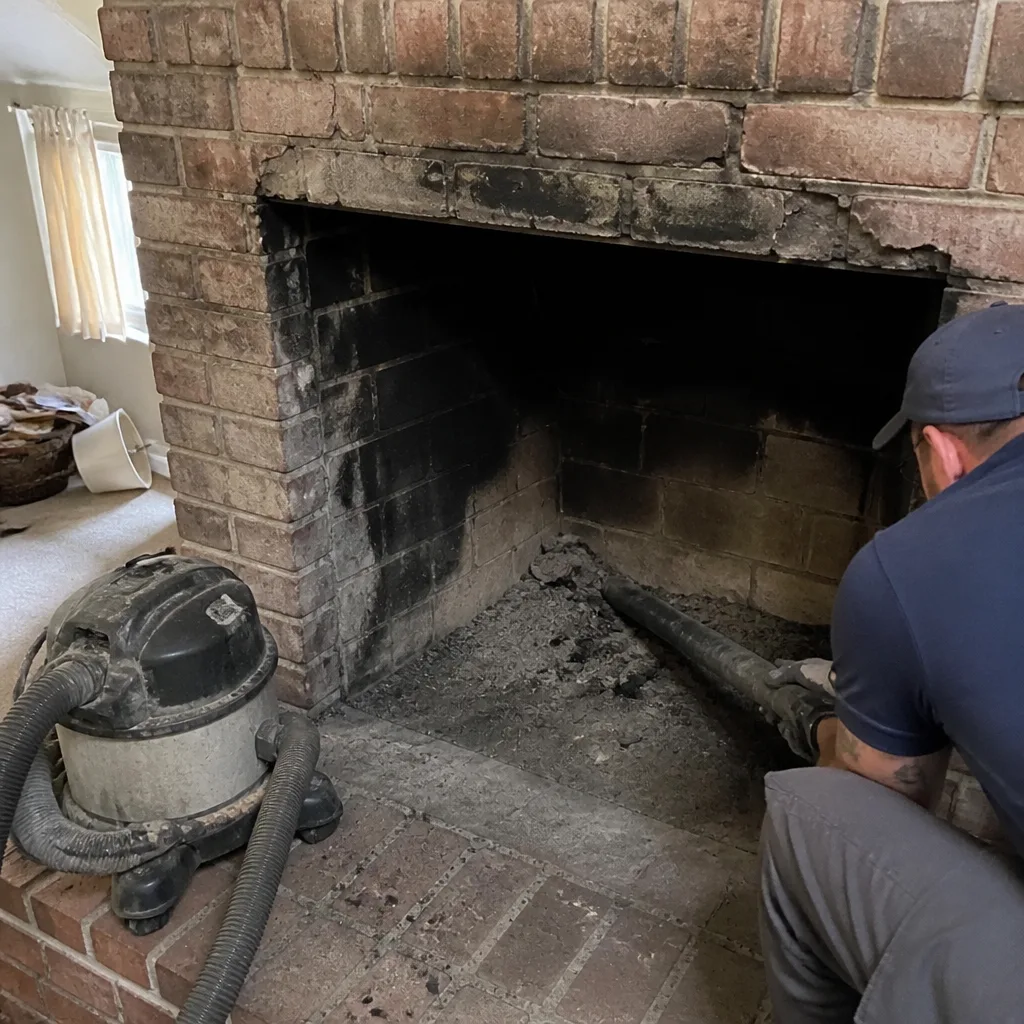 Before
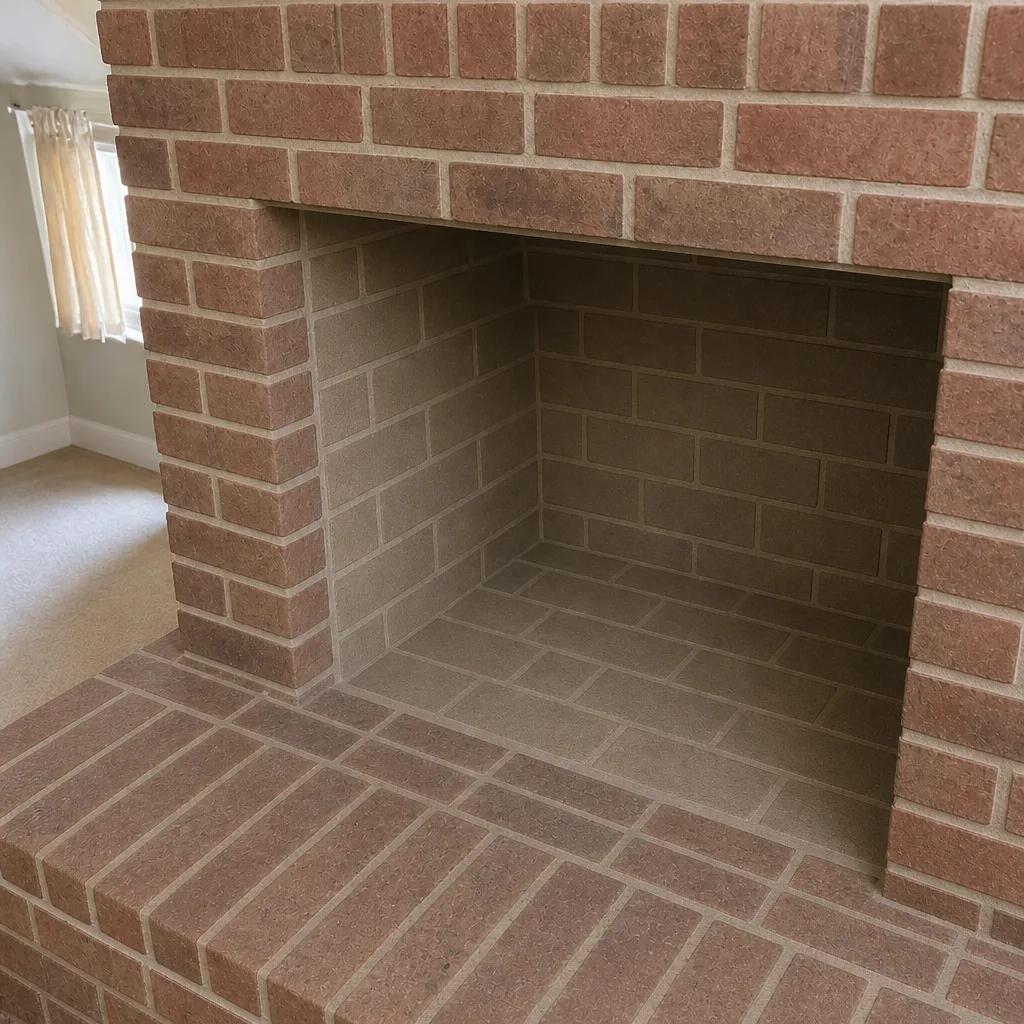 After
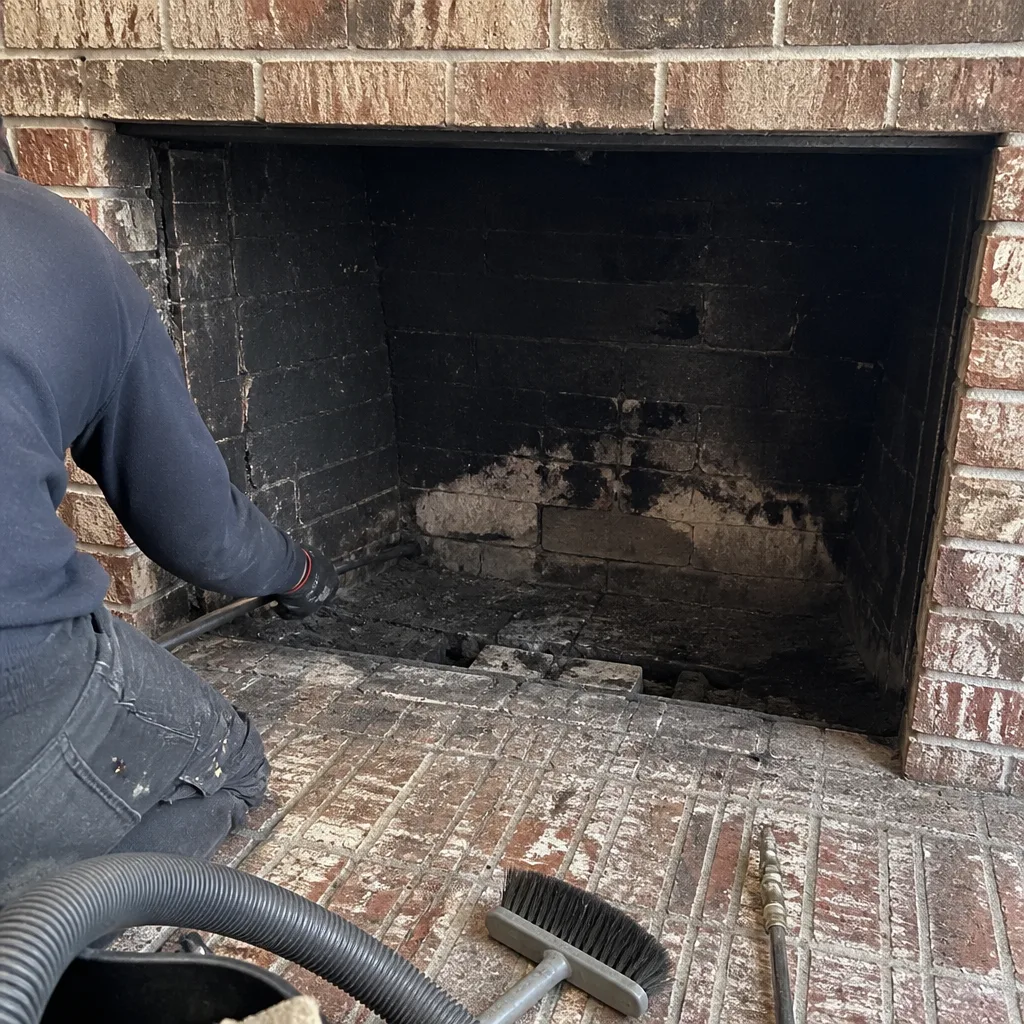 Before
 After
 Before
 After